
How to Securely Collect Client Passwords (Without Failing GDPR)
Learn why collecting client passwords via Slack or email is a massive GDPR risk, and how digital agencies can securely gather credentials during onboarding.
Slack and email are not secure password vaults. Collecting client credentials in plain text does not just look unprofessional; it exposes your agency to catastrophic GDPR liabilities and acts as a primary bottleneck during client onboarding.
You have just signed a $15,000 web redesign contract. The deposit has cleared, the kickoff call is scheduled, and your team is ready to dive in. Now comes the part everyone secretly dreads: getting the keys to the castle.
You need access to their domain registrar (GoDaddy, Namecheap), their current CMS (WordPress, Webflow), their Google Analytics, and their ad accounts. So, your project manager sends a friendly email asking for the logins.
Three days later, the client replies. Pasted directly into the body of the email, in plain text, is their root administrator password. Worse, they copy the same password into a shared Slack channel for "quicker access."
"More than 60% of data breaches involving service providers trace directly back to credentials shared via insecure channels like unencrypted emails or ad-hoc spreadsheets. Once credentials enter an inbox, they persist across intermediate mail relays, employee devices, and unmonitored backups indefinitely."
Ponemon Institute & Cyber Risk Alliance: Third-Party Cybersecurity Risk Report
If this scenario sounds familiar, your agency is sitting on an active compliance risk.
The Anatomy of an Agency Data Breach#
In the digital agency space, teams often treat cybersecurity as an "enterprise" problem. But threat actors rarely target agencies for their own internal assets; they target agencies because a service provider is a high-yield gateway into dozens (or even hundreds) of connected client systems.
Breaches Involving Compromised Credentials
The overwhelming majority of global cybersecurity breaches originate from stolen, weak, or improperly stored credentials.
According to the Verizon Data Breach Investigations Report (DBIR), compromised credentials remain the leading cause of unauthorized access incidents worldwide.
When clients send passwords via email, Slack, or shared spreadsheets, those credentials become permanently etched into chat logs and inbox archives. If a single agency workstation or email inbox is compromised, an attacker immediately gains administrative access to your entire client roster.
The GDPR and CCPA Nightmare#
Under international privacy frameworks such as the General Data Protection Regulation (GDPR) and the California Consumer Privacy Act (CCPA), digital agencies operate as Data Processors. If you fail to implement adequate technical and organizational safeguards for sensitive client data (including access credentials), you remain directly liable for regulatory non-compliance.
Regulatory fines for improper data handling can be catastrophic. Beyond financial penalties, the reputational fallout of having a client's production web property hijacked while under your watch is often fatal for an agency brand.
Understanding this exposure is critical for long-term governance. In fact, many agencies discover their greatest vulnerabilities not in infrastructure code, but in how their team handles intake. To see how these gaps emerge across everyday agency operations, review our guide on the security blind spot in agency onboarding.
Why Third-Party Password Managers Break Onboarding#
A common reaction is: "We already use 1Password or Bitwarden internally, so our team is safe."
Internal password management is essential, but it does not solve the intake problem. The friction point is how credentials travel from the client to your secure storage.
Forcing a non-technical stakeholder to sign up for a third-party password tool, configure sharing permissions, and generate secure links introduces severe friction into the first 72 hours of the engagement:
- Cognitive Friction: Clients are already preoccupied with gathering copy, photography, and brand assets. Asking them to master unfamiliar encryption utilities creates immediate paralysis.
- Project Stall: Confusion breeds procrastination. This delay directly compounds the hidden cost of chasing clients for files and access.
- The Plaintext Fallback: When clients get frustrated, they bypass instructions and paste passwords directly into email or chat, defeating the entire security protocol.
Instead of forcing clients to learn standalone security tools, agencies need an approach that feels as simple as an intake form while providing cryptographic guarantees. Whenever direct credentials can be avoided entirely, teams should also consider delegated collaborator invitations versus raw password sharing.
The Modern Way: Zero-Knowledge Credential Collection#
To gather necessary credentials securely without compromising client experience, modern agencies adopt Zero-Knowledge Architecture integrated directly into client intake workflows.
In a zero-knowledge model, the browser encrypts the credential locally on the client's device before any data leaves their machine. The central server (and the software vendor) receives only encrypted ciphertext. Only the agency holding the verified decryption key can ever decrypt and view the secret.
| Collection Method | Security Level | Client Friction | GDPR Compliance |
|---|---|---|---|
| Email or Slack | Critical Risk (Plain text) | Low | Fail |
| Google Sheets | High Risk (Shared access) | Low | Fail |
| Third-Party Vault Links | High | High (Friction & setup) | Pass |
| AssetSnag Secure Vault | Enterprise (Zero-Knowledge) | Minimal (Embedded in intake) | Pass |
Using a dedicated client portal with built-in zero-knowledge credential inputs provides two major advantages: it ends the disorganized scramble across email threads, and it enforces rigorous security policies without requiring any technical overhead from the client.
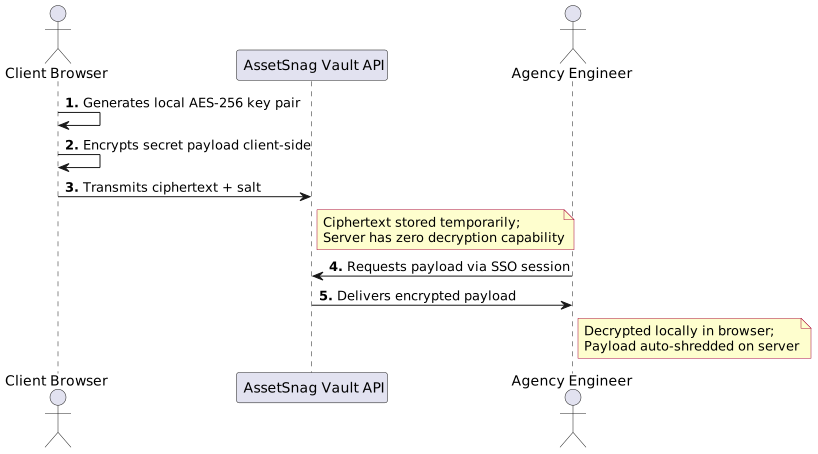
Structuring your credential collection early also lays the groundwork for a standardized, fast onboarding cycle. For a complete blueprint on accelerating project setup from weeks to days, explore our 48-hour client onboarding framework.
The Agency Access and Compliance Checklist#
To ensure your team never becomes the vulnerable link in a client's security posture, adopt this operational checklist across every new project:
Secure Credential Handoff Checklist
Stop Trading Security for Convenience#
Clients are increasingly conscious of data privacy, regulatory scrutiny, and corporate liability. An agency that requests administrative credentials over casual email threads signals a lack of operational rigor and security discipline.
Conversely, delivering a branded, zero-knowledge intake experience during onboarding establishes immediate credibility within the first 48 hours of collaboration.
Protect your clients, insulate your agency against compliance breaches, and streamline your onboarding workflow from day one.
Collect passwords securely, without the friction.
AssetSnag features zero-knowledge encrypted credential fields built directly into your branded client portal. Protect your agency and impress your clients from day one.

Muhammet Yılmaz
Founder & Lead Architect, AssetSnag
Founder of AssetSnag & software engineer passionate about secure, frictionless agency operations.
Related Playbooks & Articles
Handpicked articles to elevate your agency operations.
The Hidden Danger of Client DNS Access (And How to Secure It)
Stop asking clients for their GoDaddy passwords in plaintext. Learn how to securely manage DNS delegation without breaking MX records or risking security breaches.
Client Access Delegation vs. Password Sharing: How Modern Agencies Onboard Accounts Without Friction
Why emailing passwords causes 2FA lockouts, security liability, and client anxiety, and how interactive guided delegation solves agency access collection.
The Security Blind Spot in Agency Onboarding: Plaintext Credentials vs. Zero-Knowledge Delegation
Why collecting client credentials and API keys via email creates liability, and how client-side zero-knowledge encryption solves agency onboarding risk.